

On Monday, February 9, speaking at the 10th meeting of the Constitutional Commission, Chairman of the Federation of Trade Unions of the Republic of Kazakhstan (FTURK) and member of the Commission, Satýbaldy Dauletalin, noted that work on the draft new Constitution was built from the very beginning on an understanding of the high responsibility for its impact on society.
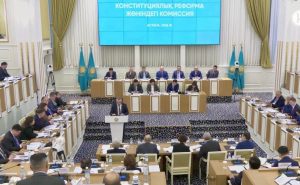
“For me, as a representative of nearly two million trade union members, it was fundamentally important that discussion of this document not be limited to the framework of the Commission and the expert community. That is why the draft new Constitution was submitted for broad discussion within trade union organizations, labor collectives, at meetings with activists, and with ordinary union members in the regions and at enterprises. It was a living, sometimes tough, but honest conversation. People spoke about wages, occupational safety, fear of losing their jobs, and the future of their children. The Federation of Trade Unions supported this draft new Constitution in substance, because in many ways it coincided with what we hear from working people. Any decision of the state must pass one test: does it make the lives of working people easier, more stable, and fairer,” said Satýbaldy Dauletalin.
According to him, the logic of the draft new Constitution corresponds to the principles of a Just Kazakhstan.
“Already in the first article, Kazakhstan is закреплен as a social state, and the highest value is declared to be the individual, their life, rights, and freedoms. For a wage worker, this is a crucial signal. The state is built not around figures and reports, but around the person who works, creates value, and ensures the country’s stability,” noted the Chairman of FTURK.
Satýbaldy Dauletalin also focused separately on the right to work. In his view, the draft fills this right with real social content.
“The state assumes the obligation not merely to proclaim this right, but to create conditions for employment, retraining, safe working conditions, and protection from arbitrary decisions. This is an important shift. Labor is recognized not as an individual risk, but as the foundation of a decent life,” emphasized the Chairman of FTURK.
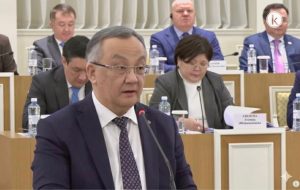
Another key block, according to the member of the Constitutional Commission, is solidarity.
“The solidarity of the state, business, and labor. Not shifting risks onto workers. Not one-sided responsibility. But an honest balance of interests, where the state is an active participant and assumes responsibility for people’s living conditions. For a worker, this means, first of all, confidence in tomorrow and less fear of change. I also consider participation of people in decision-making to be fundamentally important — through institutions of public participation and the People’s Council. For the first time at the constitutional level, a new corridor opens between the authorities and real life. Not through protest and not through sporadic outbursts of dissatisfaction, but through systematic dialogue. If this norm is implemented properly, issues of working conditions, labor protection, employment, and incomes will be raised not episodically, but on a constant basis. It is also important that the draft Constitution sets the right orientation for the future. Digitalization, technology, and artificial intelligence should not become a justification for layoffs or deterioration of working conditions. If the economy accelerates, then protection of the individual must be strengthened,” believes Satýbaldy Dauletalin.
Speaking about the draft new Constitution, the Chairman of FTURK emphasized that the philosophy of relations in society is changing.
“In general, the draft new Constitution changes the very philosophy of relations. Justice becomes the guiding principle. Labor ceases to be a secondary factor and is recognized as the foundation of the country’s stability. The state assumes responsibility for the individual during periods of change. And workers acquire not only obligations, but also real levers of influence. This is precisely how the social state is understood today in international practice, including in the approaches of the International Labour Organization,” stressed Satýbaldy Dauletalin.
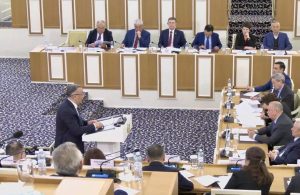
In conclusion of his speech, the Chairman of the Federation of Trade Unions thanked his colleagues for their joint work and for open and respectful dialogue.
“I would like to thank my colleagues, the Chairman of the Commission and his deputies for their readiness to listen, argue, seek solutions, and for the lively exchange of opinions without formality or closed doors. For a representative of working people, this is fundamental. It is a matter of trust. And it is precisely in such an atmosphere that a Constitution can be born that reflects the interests of society, and not only the legal logic of a document,” concluded Satýbaldy Dauletalin.
Tomorrow, the 11th meeting of the Constitutional Commission is planned. As of today, more than 4,000 proposals from political parties, public associations, and citizens of the Republic of Kazakhstan have been submitted for consideration by Commission members.
Trade Union Communications Center of the Republic of Kazakhstan