

On April 15, as part of a working visit to the Pavlodar region, a delegation of the Federation of Trade Unions of the Republic of Kazakhstan, led by FTURK Chairman Satybaldy Dauletalin, visited Kazakhstan’s largest coal mining enterprise – Bogatyr Komir LLP.
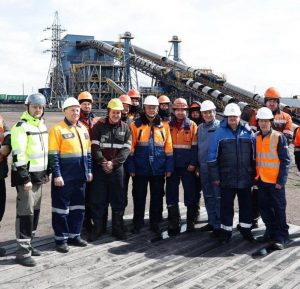
Bogatyr Komir LLP carries out coal mining through open-pit methods at the Bogatyr and Severny mines and accounts for about 70% of the coal output of the Ekibastuz basin. The company’s production capacity is 45 million tons of coal per year, and total industrial reserves are estimated at approximately 3 billion tons. Currently, around 6,500 people are employed at the enterprise.
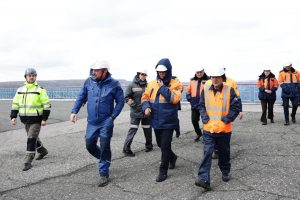
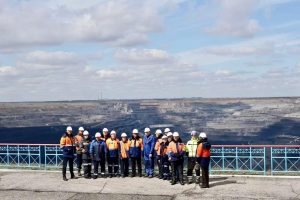
As part of the visit to Bogatyr Komir, the FTURK delegation, led by the Chairman, held several meetings—with social partners, the workforce, and the company’s trade union activists; visited the observation platform of the open-pit mine; reviewed facilities of the conveyor technology complex (CTC), as well as the administrative and бытовой complex, where the main production services are concentrated. In total, nearly the entire working day—about 7 hours—was devoted to this.
The first meeting was dedicated to communication with social partners. General Director of Bogatyr Komir LLP, Yevgeny Masternak, provided a detailed overview of current operations, management structure, social infrastructure, and ongoing investment projects.
According to him, work with personnel at the enterprise is comprehensive.
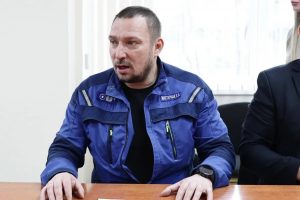
“The HR Directorate includes two key areas—personnel management and social policy. Both areas are strategically important, given the scale of the enterprise and the number of employees,” the director added.
As reported, the enterprise operates a catering complex, which includes six canteens, including one in the administrative complex, with a unified pricing policy for all employees.
Social and health infrastructure facilities were also presented.
“The company has a sports and recreation complex, a fitness and wellness center, as well as a large recreation base on Lake Zhasybay. For employees’ children, the ‘Karlygash’ camp operates, and for staff—the ‘Beryozka’ health camp. All facilities are on the company’s balance sheet and continue to be maintained and developed. We deliberately preserve and develop this infrastructure as an important element of social support for employees,” the General Director reported.
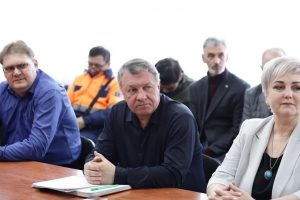
Regarding social partnership, Yevgeny Masternak noted that four trade union organizations with varying membership operate at the enterprise. In total, more than 5,000 employees of Bogatyr Komir are union members.
“At the same time, an equal approach is applied to all trade unions. If employees initiate the creation of an additional organization, this opportunity will also be provided—it is their right. All important issues are discussed jointly with the participation of all trade union organizations. This helps avoid fragmentation in communication and ensures a unified understanding of the current situation,” he said.
During the meeting, issues of HR policy, attracting youth, and developing corporate culture were also discussed. It was noted that the average age of employees is 43, with about 800 employees being young specialists under 35. A youth movement is actively developing at the enterprise, with a youth council in place and initiatives in sports, culture, and information activities being implemented.
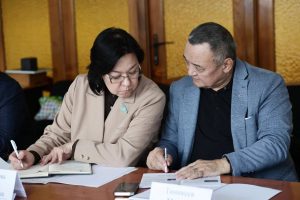
After reviewing the administrative complex, the system of organizing production meetings, and the existing social infrastructure, Chairman of the Federation of Trade Unions of the Republic of Kazakhstan Satybaldy Dauletalin emphasized the importance of open dialogue between employees, employers, and trade unions.
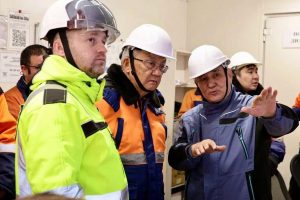
“For the Federation of Trade Unions, it is fundamentally important to hear the voice of workers directly on site. We always proceed from the understanding that effective decisions are made only through direct, honest, and open dialogue. At the same time, it is important that employers also participate in such meetings, as many issues require prompt discussion and decision-making,” Satybaldy Dauletalin noted.
In a conversation with the employer, Satybaldy Dauletalin addressed issues of wages and social justice.
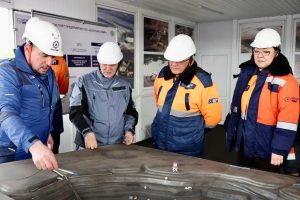
“Today it is important not only to ensure stable wages but also to speak about their fairness. We strive to ensure that workers’ incomes allow them to достойно support not only themselves but also their families. This corresponds to international standards, including the conventions of the International Labour Organization. The issue of fair wages is directly linked to social stability and quality of life,” emphasized the Chairman of FTURK.
Speaking about the tasks of the trade union movement within the system of social partnership, Satybaldy Dauletalin highlighted the importance of systematic and consistent work aimed at protecting workers’ rights and strengthening constructive dialogue among all social partners.
“Trade unions today are not just an institution for protecting workers’ rights; they are a full-fledged participant in social partnership. Our task is to ensure a balance of interests, preventing bias toward either employers or employees. We must work systematically, explain rights to people, and foster a responsible attitude toward labor and safety. At the core of all our work is a simple and clear principle: a person must come to work in the morning alive and healthy and return home the same way. This is not just words—it is the foundation of state policy and employer social responsibility. Safe labor is priority number one, and no production results can be achieved at the expense of workers’ health,” said Satybaldy Dauletalin.
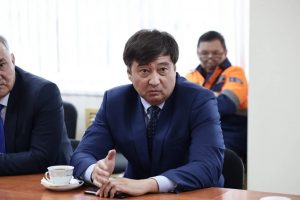
The Chairman of FTURK also emphasized the need for a comprehensive approach to occupational safety and strengthening preventive measures in the workplace.
“According to our analysis, about 70% of accidents occur due to employer fault. That is why we are working to strengthen employer responsibility and improve legislation in this area. At the same time, it is important to build personal responsibility among workers—this is a matter of safety culture requiring constant joint work. We have achieved a revision of approaches to so-called ‘shared responsibility.’ In global practice, the main responsibility for workplace safety lies with the employer, and this principle must be strictly observed,” he stressed.
The Chairman also noted the importance of modernizing production processes and introducing new technologies, emphasizing the need for a balanced approach that takes into account workers’ interests and the social consequences of transformation.
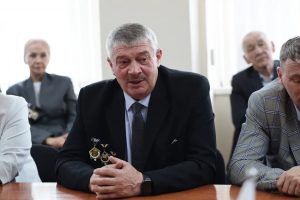
“We understand that modernization and automation are inevitable. The introduction of digital solutions, elements of artificial intelligence, and increased production efficiency are objective realities. However, it is крайне important that these processes do not lead to social tension. Every technological change must be accompanied by measures to preserve employment, retrain workers, and create new opportunities for professional growth,” he noted.
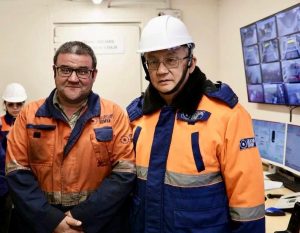
In turn, the company’s management reported that modernization, equipment renewal, and the introduction of new technologies are in an active phase. As part of an investment program worth approximately 360 billion tenge, projects are being implemented to develop conveyor technologies, automate processes, and обновить equipment fleet.
Meanwhile, Yevgeny Masternak assured that automation will be accompanied by a phased approach to workforce management.
“We do not plan sudden layoffs. The main focus is on retraining, workforce redistribution, and gradual adaptation of employees to new conditions. We have our own training center that allows us to prepare specialists in line with modern requirements,” he noted.
During the dialogue, Satybaldy Dauletalin emphasized the need for transparency in such processes. Overall, he noted the high level of social partnership development at the enterprise and the effective social responsibility of the employer.
“Any changes must be as open and understandable as possible for workers. Where there is dialogue, there is no social tension. This is a key principle that must be observed at all enterprises. Today we see that Bogatyr Komir LLP has built a system of social partnership, there is an understanding of tasks and readiness for dialogue. This is an important foundation for further development. Our common task is to ensure that all reforms, investments, and technological changes ultimately work for the worker, improving their quality of life,” said the Chairman of FTURK.
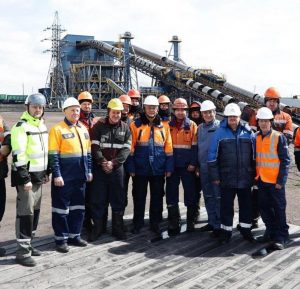
The visit continued with a meeting between the Chairman of the Federation of Trade Unions of the Republic of Kazakhstan and employees directly at their workplaces.
During the conversation at the conveyor technology complex (CTC), Satybaldy Dauletalin asked workers clarifying questions about daily working conditions, provision of protective clothing, and social support measures. Workers noted that the enterprise provides them with protective clothing in a timely manner and also offers compensation for meals and dairy products.

Special attention was paid to income levels and whether wages allow workers to meet family needs. Employees подробно described their family situations, household composition, daily expenses, and noted that overall income levels provide a certain stability and allow them to plan expenditures.
Thus, one employee reported that he works in the loading section, has more than 20 years of experience at the enterprise, and is well familiar with the specifics of the job. According to him, his current salary is around 700–800 thousand tenge, which, in his view, allows him to support his family and cover basic needs.
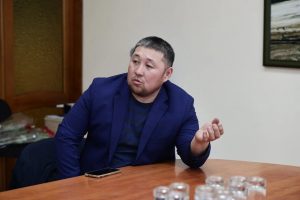
During the conversation, Satybaldy Dauletalin emphasized the importance of direct communication with workers and obtaining information “firsthand.”
“I came here specifically to speak with you directly and understand the real situation. For us, it is fundamentally important to see the situation not only through reports but also through the opinions of workers themselves—how working conditions are ensured, whether wages are fair, whether living conditions meet established standards, and how safety is maintained. Safe work is a basic condition without which it is impossible to talk about production or development. Therefore, it is important for us to understand how the safety system is organized at your workplaces and which issues require attention,” he noted.
Speaking about social policy and wages, the Chairman highlighted the Federation’s achievements in regulating minimum guarantees for workers.
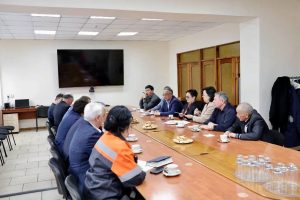
“Last year, ILO Convention No. 131 on minimum wage was ratified. Its logic is that the minimum wage should support not only the worker but also their family members. This is a fundamentally important shift in approaches that changes the very understanding of social justice in wages, and we are consistently promoting its implementation. Currently, the government is considering raising the minimum wage to 150,000 tenge. This benchmark should be at least 50% of the median wage. Such decisions are aimed at equalizing incomes and strengthening social stability across the country. When the minimum wage increases, it triggers changes across the entire tariff grid. Even if your current level is higher, recalculations and adjustments occur in the system as a whole. At the same time, it is always important to consider the enterprise’s economic realities,” he noted.
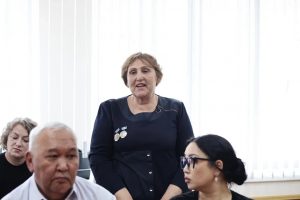
During the conversation, Satybaldy Dauletalin explained the significance of wage indexation and its role in maintaining purchasing power.
“Indexation is a mechanism that protects incomes from inflation and preserves their real value. It essentially maintains the current standard of living. Wage increases, on the other hand, are a step forward that improves living standards and expands family opportunities,” he emphasized.
A separate emphasis was placed on the role of trade unions as a tool for collective protection of workers’ interests and dialogue with employers.
“It is important to understand that it is extremely difficult to change the situation alone. A trade union allows you to combine efforts and turn individual appeals into a collective position that can be effectively addressed with the employer. This is not a formal structure but a real instrument of influence and protection. No system will work without your personal involvement. Safety requirements, labor discipline, compliance with rules—this is a shared responsibility. The trade union helps, but it does not replace the personal position of each worker,” he noted.
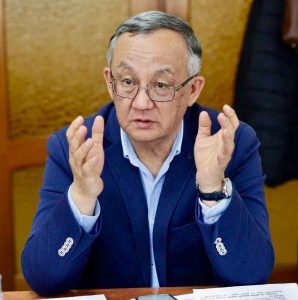
During the discussion, constitutional changes concerning workers’ rights and social guarantees were also noted.
“In the updated Constitution, it is закреплено that a person, their rights, and freedoms are the highest value. This means the state undertakes to create conditions for a decent life. For the first time at this level, the right to work is clearly enshrined, strengthening the entire system of guarantees. The right to work is not just wording—it is a set of obligations: safe conditions, fair pay, and social protection. Now the task is to ensure these norms are consistently implemented through laws, collective agreements, and enterprise practices. Citizens now have the opportunity to обращаться directly to the Constitutional Court if they believe their rights are violated. This is a serious legal protection tool that strengthens the position of workers. Any reforms must pass a simple test: do they improve workers’ lives? If not, their effectiveness is questionable,” he added.
At the end of the meeting, the Chairman expressed gratitude to the workers for their work.
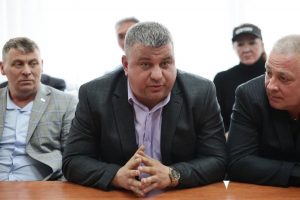
“I want to thank the employees of the enterprise for your work. I understand the conditions you work in. I myself have gone through industrial production and know what hazardous and тяжелый labor is. Therefore, I sincerely thank you and express appreciation on behalf of the Federation for your daily contribution to the country’s economy,” he said.
The visit continued with a separate meeting with representatives of trade union committees of Bogatyr Komir LLP, where issues of trade union development, strengthening unity, improving labor rights protection, and ensuring workplace safety were discussed.
Representatives voiced issues requiring solutions at enterprise, отраслевой, and national levels.
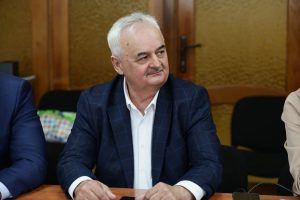
“We gathered today to openly discuss existing problems. It is important for us that the Federation is aware and assists in resolving issues beyond the competence of primary organizations,” noted Marat Kadauov.
Trade union leaders emphasized the hazardous nature of the enterprise.
“Safety and social protection require constant attention,” added Sergey Mikhailyuk.
Union leaders reported that about 100 technical inspectors operate at the company.
Issues of protective clothing were highlighted as critical.
Problems include delays, sizing, and quality.
The upcoming collective agreement negotiations were also discussed.
“We act as a unified front,” noted Sergey Chapala.
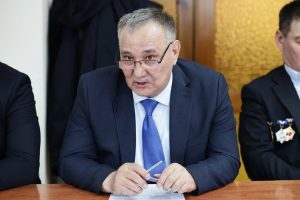
Other issues included hazardous conditions, compensation, infrastructure, ecology, and pension status.
The absence of a state labor inspector in Ekibastuz was also raised.
Calls were made to unify the four trade unions.
Satybaldy Dauletalin confirmed readiness to take these issues under control.
“All issues will be systematized and sent to relevant authorities,” he assured.
He emphasized unity and warned against fragmentation.
“Unity makes trade unions stronger,” he said.
He also highlighted safety concerns and the need for responsibility.
“Young people require new approaches,” he added.
Digital transformation of unions by 2030 was outlined as a priority.
In conclusion, he outlined the mission of trade unions.
“Trade unions must become centers of influence,” he said.
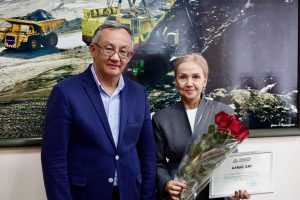
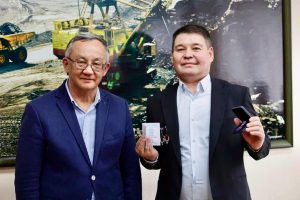
The visit concluded with awarding several workers.
Trade Union Communications Center of FTURK